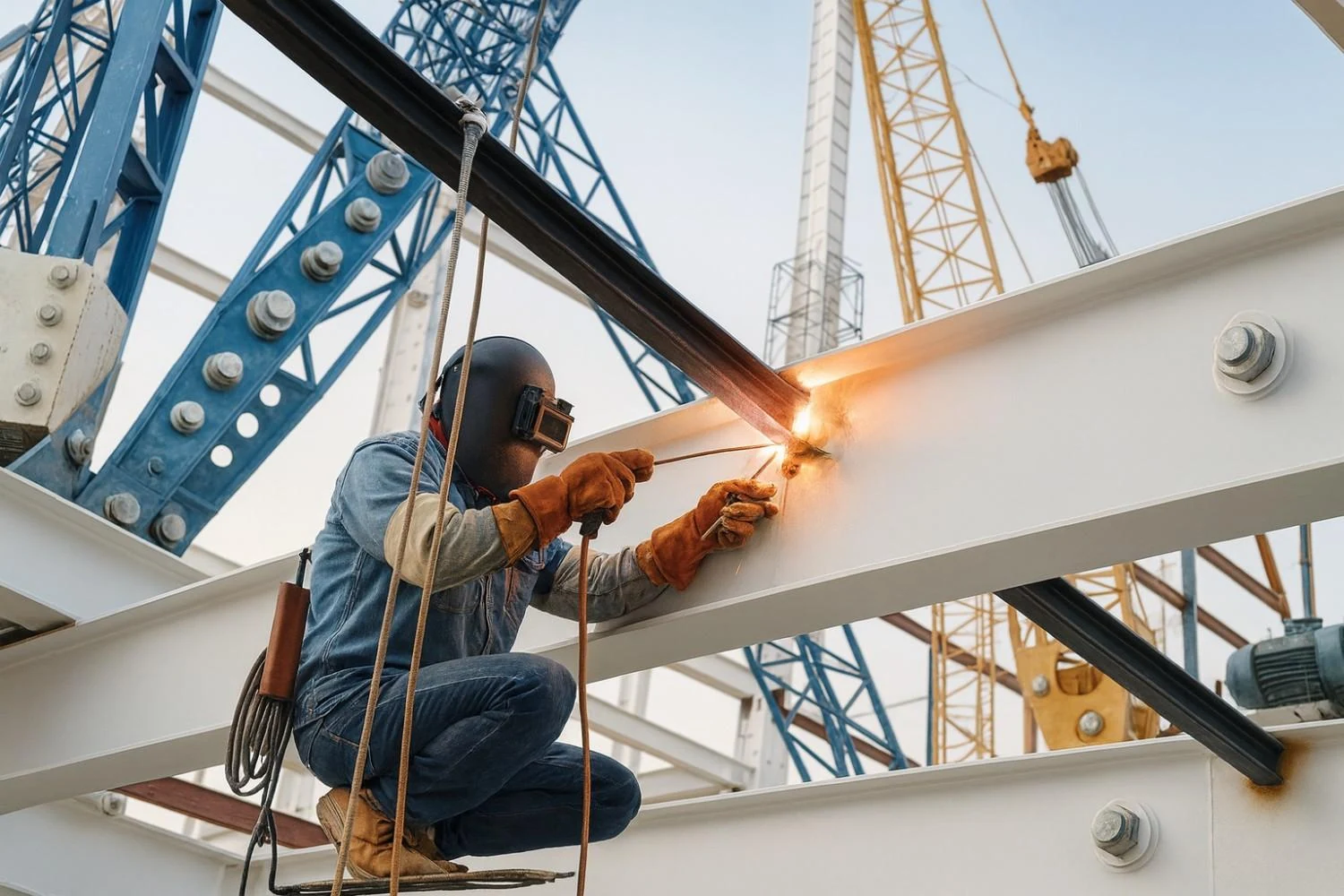
Industrial Structural Fabrication
Structural fabrication is a critical process in industrial construction, where strong and reliable frameworks are created using materials such as steel, concrete, and engineered composites. These structures form the backbone of factories, commercial buildings, bridges, and large-scale infrastructure projects.
Our focus: Delivering precision-engineered structural
fabrication solutions that ensure durability, safety, and high-performance
support for industrial and infrastructure applications.
Understanding Structural Fabrication
1. Concept and Role
- Structural Fabrication: Process of designing, manufacturing, and assembling load-bearing components.
- Application: Used in buildings, industrial plants, bridges, towers, and heavy infrastructure.
2. Scope of Work
- Component Creation: Includes beams, columns, trusses, frames, and support structures.
- On-Site Integration: Fabricated parts are transported and assembled at construction sites.
Fabrication Process
1. Design & Engineering
- Structural Planning: Engineers prepare detailed drawings based on load requirements.
- Material Selection: Choosing steel, concrete, or composite materials based on strength and usage.
2. Material Preparation
- Procurement: Sourcing high-quality raw materials for fabrication.
- Inspection: Ensuring material meets required standards before processing.
3. Fabrication & Assembly
- Cutting & Shaping: Materials are cut and formed into required dimensions.
- Welding & Joining: Components are connected using welding, bolting, or fastening.
- Surface Finishing: Coating, painting, or galvanizing for protection and durability.
4. Quality Control
- Inspection: Checking accuracy, strength, and alignment of fabricated parts.
- Testing: Ensuring structures meet safety and load-bearing requirements.
5. Installation
- Pre-Assembly: Partial assembly in workshops before site delivery.
- Site Installation: Final positioning using cranes and heavy equipment.
Types of Structural Fabrication
1. Steel Fabrication
- Usage: Industrial buildings, bridges, towers, and heavy structures.
- Advantage: High strength, flexibility, and durability.
2. Concrete Fabrication
- Usage: Precast panels, beams, and columns in construction projects.
- Advantage: Strong, long-lasting, and suitable for heavy load structures.
3. Composite Fabrication
- Usage: Lightweight and high-performance structural systems.
- Advantage: High strength-to-weight ratio and corrosion resistance.
Key Advantages
01
High Strength Structures
Provides strong frameworks capable of supporting heavy industrial loads.
02
Precision Engineering
Ensures accurate fabrication and proper alignment of structural components.
03
Durability & Safety
Built to withstand environmental conditions and meet safety standards.
04
Flexible Applications
Suitable for industrial plants, buildings, bridges, and infrastructure projects.